
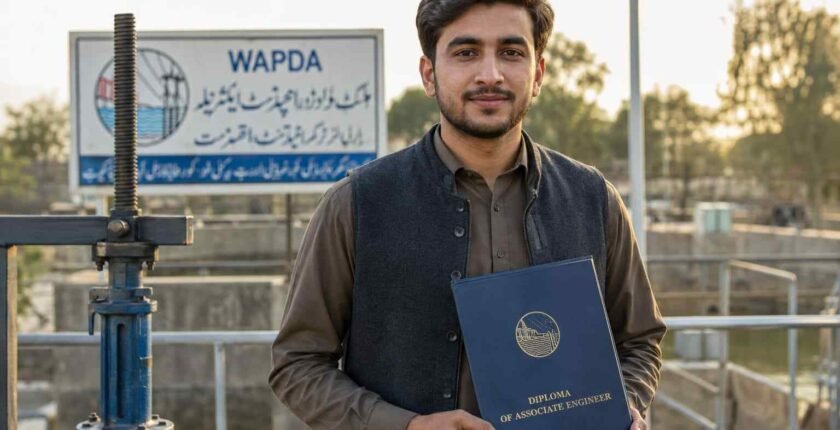
Government Jobs After DAE in Pakistan: The Best Guide (2026)
Government Jobs After DAE in Pakistan: What My Younger Brother-in-Law Actually Went Through
My younger brother-in-law finished his DAE in Electrical Technology and spent almost eight months assuming his only realistic career path was private-sector factory or maintenance work, purely because that’s what most of his classmates were pursuing and nobody in his immediate circle had ever actually landed a government position with just a diploma. He kept scrolling through generic online lists that vaguely mentioned “government jobs for DAE holders” without any real specifics, no clear departments, no actual application process, nothing concrete enough to act on.
It wasn’t until a family friend, a retired WAPDA junior engineer, sat him down one evening and actually explained the real landscape that things started making sense. There were genuinely multiple departments actively hiring DAE holders: WAPDA, PWD, Railways, various provincial irrigation departments, and even certain PPSC and FPSC posts specifically requiring diploma-level qualifications rather than a full bachelor’s degree. He’d simply never been shown the actual roadmap.
He applied properly for the first time about a year ago, got selected into a provincial irrigation department as a Sub-Engineer roughly eight months later, and the entire process taught our whole family things about government recruitment for diploma holders that I genuinely hadn’t understood before either. This is everything from that experience, laid out the way I wish someone had explained it to him from the very beginning.
Why DAE Holders Often Overlook Government Opportunities
The core issue, based on what my brother-in-law and two of his DAE classmates who went through similar journeys have told me, is that government job advertisements for technical diploma holders don’t get anywhere near the same visibility as those for BA/BSc graduates or CSS-track candidates. Most popular job portals and Facebook groups are flooded with content aimed at bachelor’s degree holders, and DAE-specific openings tend to appear in more specialized channels, technical department websites, provincial service commission portals, and sometimes even newspaper classified sections that younger job seekers rarely check anymore.
There’s also a persistent misconception that a diploma somehow limits you exclusively to private-sector technical roles. That’s simply not accurate. Several government departments have specific quota positions structured around DAE qualifications precisely because they need technically trained personnel at that exact level, not necessarily full engineering graduates, for particular operational and supervisory roles.
Government Departments That Actively Hire DAE Holders
My brother-in-law’s successful application went through the provincial irrigation department, a route he genuinely hadn’t considered initially because he’d assumed irrigation-related government work required an agricultural or civil engineering background specifically, rather than realizing his electrical DAE qualification was directly relevant to their technical maintenance and supervisory positions.
Understanding the Actual Eligibility Landscape
This is where a lot of confusion happens, and it’s worth breaking down clearly since DAE-specific eligibility genuinely differs from bachelor’s-level requirements in meaningful ways.
My brother-in-law found the reduced competition angle genuinely encouraging once he understood it properly. Because DAE-specific technical posts require that exact qualification level, the applicant pool is naturally narrower than the flood of bachelor’s degree holders competing for general administrative or engineering posts, which realistically improved his odds compared to what he’d assumed going in.
Step-by-Step: How My Brother-in-Law Actually Landed His Position
- Identified his specific DAE specialization’s relevant departments rather than applying broadly to anything mentioning “government job,” narrowing his search specifically to electrical-technical roles
- Registered directly on relevant department and provincial commission websites, bookmarking pages for WAPDA, the provincial irrigation department, and PWD to check regularly for new advertisements
- Prepared specifically for the written technical test using DAE-level electrical technology reference material, since the test content differed noticeably from generic general knowledge exams he’d initially assumed would be the focus.
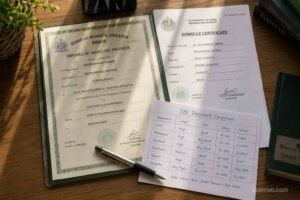
- Gathered and properly attested all required documents in advance, including his DAE certificate, domicile, and CNIC, learning from a cousin’s earlier mistake of scrambling for attestation at the last minute
- Applied to multiple relevant departments simultaneously rather than waiting for one specific opportunity, since different departments’ advertisement cycles don’t align
- Attended the interview stage with a clear, honest explanation of his technical background and specific interest in that department’s operational work, rather than a generic rehearsed answer
- Followed up through official channels to track his application status rather than relying on informal contacts or rumors about selection timelines
Step 3 was genuinely the biggest surprise for him. He’d assumed the written test would be similar to general knowledge-heavy exams he’d heard about for other government posts, but it was specifically technical, covering electrical theory, safety standards, and practical scenario-based questions directly relevant to his diploma coursework.
What the Selection Process Actually Looked Like
Based on his experience and what his classmate who went through WAPDA recruitment separately described, the general structure across these departments follows a fairly consistent pattern, though specifics vary.
- Document screening and eligibility verification — confirming DAE certificate authenticity and domicile requirements
- Written technical test — subject-specific questions tied directly to the relevant DAE discipline (electrical, civil, mechanical, etc.)
- Practical/technical assessment in some departments — hands-on or scenario-based technical evaluation depending on the specific role
- Interview panel — assessing technical knowledge depth, communication, and genuine suitability for the specific operational role
- Final merit list and selection — based on combined written and interview performance, sometimes factoring in relevant quota categories.s
His classmate’s WAPDA experience included an additional practical component that my brother-in-law’s irrigation department process didn’t have, underscoring that the exact structure genuinely varies by department, which is why reading each specific advertisement carefully matters more than relying on a generalized expectation across all DAE government opportunities.
Common Mistakes DAE Holders Make During This Process
- Assuming government jobs are exclusively for bachelor’s degree holders — several departments have specific quota positions structured around DAE-level qualifications.
- Only checking mainstream job portals — many DAE-specific advertisements appear on departmental websites or provincial commission portals that don’t always get cross-posted to popular general job sites.s
- Not preparing for a technical, subject-specific written test — assuming general knowledge preparation alone will be sufficient, when many DAE-level posts test specific technical competency directly.
- Waiting for one “perfect” opportunity instead of applying broadly — different departments’ advertisement timing varies significantly, and limiting yourself to one target department extends the wait unnecessarily
- Neglecting document attestation until the last minute — this genuinely delayed one of his classmates’ applications by nearly two weeks during a tight submission window
- Underestimating the interview’s focus on practical, hands-on knowledge — theoretical answers alone often aren’t as convincing as demonstrating genuine familiarity with real operational scenarios.ios
The document attestation mistake specifically cost his classmate a missed deadline for one WAPDA cycle, forcing him to wait for the next advertisement instead- a completely avoidable delay that simply required attesting documents a few weeks earlier.
Realistic Timeline: What to Actually Expect
My brother-in-law’s total process, from his successful application to actually joining, took just under eight months, which he says required real patience, especially during the gap between his interview and final result, a period he described as the most mentally difficult part simply because there was nothing left to actively do but wait.
Frequently Asked Questions
Can DAE holders apply for CSS or PMS exams directly?
Generally no; CSS and PMS typically require a bachelor’s degree, so DAE holders would need to complete a relevant bachelor’s program first if targeting those specific competitive exams.
Is PEC registration necessary for DAE-level government technical posts?
No, PEC registration is specific to engineering degree holders; DAE-level posts typically don’t require this, though it’s always worth confirming against the specific advertisement’s stated requirements.
Do all provinces have similar government opportunities for DAE holders?
The general structure is similar across provinces, though specific departments, advertisement timing, and available vacancies can vary noticeably between provinces.
Can a DAE holder later upgrade to an engineering-level government post through further education?
Yes, many DAE holders pursue a relevant bachelor’s degree later, which can open eligibility for higher-tier engineering posts requiring that qualification.
How competitive are DAE-specific government posts compared to general BPS posts?
Generally less saturated than posts open to broader bachelor’s degree holders, since DAE-specific quota positions have a naturally narrower eligible applicant pool.
Is prior work experience required for entry-level DAE government positions?
No, most entry-level DAE-specific posts are designed for fresh diploma holders and don’t require prior work experience.
What subjects should I focus on preparing for the written technical test?
Focus specifically on your DAE discipline’s core technical subjects, since these tests typically assess subject-specific competency rather than broad general knowledge alone.
Are there age relaxations for DAE holders applying to government technical posts?
Age relaxation policies vary by department and specific recruitment cycle, so always check the exact age criteria stated in that particular advertisement.
Can I apply to multiple departments’ DAE-specific postings at the same time?
Yes, there’s generally no restriction against applying to multiple departments simultaneously, and doing so is a reasonable strategy given differing advertisement cycles.
What’s the most reliable way to stay updated on new DAE government job advertisements?
Regularly checking official department websites directly, along with relevant provincial public service commission portals, tends to be more reliable than depending solely on general job aggregator sites or social media groups.
Final Thoughts
My brother-in-law’s eight months of uncertainty before finally understanding the real landscape of government opportunities for DAE holders wasn’t due to lack of qualification or effort; it came entirely from not knowing where to actually look and which departments genuinely valued his specific technical background. Once that clarity arrived, the actual application and selection process, while still requiring patience and proper preparation, followed a completely learnable, repeatable path.
If you’re a DAE holder feeling like government jobs are somehow reserved exclusively for bachelor’s degree candidates, that assumption genuinely isn’t accurate. Research the specific departments relevant to your technical discipline, prepare properly for subject-specific testing rather than generic exam prep, and apply broadly across multiple opportunities rather than waiting for one perfect listing. That combination is exactly what turned my brother-in-law’s prolonged uncertainty into an actual government position within a realistic, achievable timeline.