
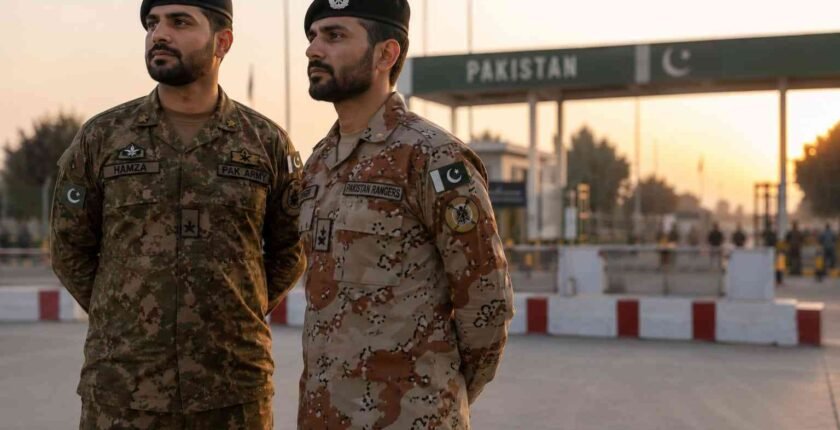
Pakistan Rangers vs Pakistan Army: The Best Full Guide 2026
Pakistan Rangers vs Pakistan Army: Difference, Salary & Career
My cousin’s son got a Rangers recruitment advertisement forwarded to him in a family WhatsApp group and got genuinely excited, assuming it was essentially the same thing as Army recruitment, just under a different name. He almost didn’t bother reading the actual eligibility criteria carefully, figuring the application process, training, and career path would all be more or less identical anyway. It was only when a family friend who’d actually served in the Rangers for several years sat him down and explained the real structural differences that he realized he’d been treating two genuinely distinct organizations as interchangeable.
That conversation cleared up a confusion I’ve noticed constantly among young men in our extended circle. Pakistan Rangers and Pakistan Army are both respected, uniformed services, but they operate under different command structures, have different core mandates, and offer genuinely different career trajectories, something that matters a lot when you’re deciding which path to actually pursue.
If you’re trying to figure out the real differences between Rangers and the Army, whether for your own career decision or to help someone in your family choose properly, this is based on that family friend’s actual firsthand explanation, cross-checked against official recruitment information.
Why People Constantly Confuse the Two
Both organizations wear uniforms, both involve rigorous physical training, and both are widely respected as serving the country’s security. That surface-level similarity is exactly why so many young applicants, especially those without any family background in either organization, assume they’re essentially the same career path with different branding.
The actual distinction comes down to command structure and core purpose. Pakistan Army falls directly under the Ministry of Defence and is the country’s primary military force responsible for national defense. Pakistan Rangers, on the other hand, operates as a paramilitary force under the Ministry of Interior, primarily tasked with border security, internal security duties, and specific law enforcement support roles, particularly well known for their role in urban security operations in cities like Karachi.
Core Structural Differences
Our family friend, who served in Sindh Rangers for over a decade, specifically emphasized that Rangers is regionally organized; Sindh Rangers and Punjab Rangers operate somewhat separately, whereas the Army command structure is unified nationally regardless of which region a soldier gets posted to.
Entry Requirements and Career Path Comparison
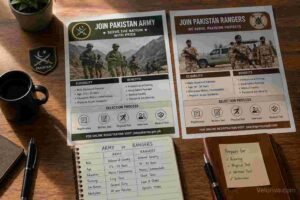
This last point is exactly what our family friend said surprised him most when he first joined. He’d assumed Rangers offered an identical officer career ladder to the Army, but discovered that many senior Ranger command positions are actually filled by Army officers serving on deputation, meaning the very top of the organizational structure isn’t purely built from within Rangers’ own ranks the waythe Army’ss structure is internally.
Step-by-Step: How to Actually Decide Which Path Fits You
- Clarify your actual interest: national defense and combat-oriented service versus border security and internal law enforcement support, since these represent genuinely different day-to-day realities.
- Check the specific educational and physical eligibility criteria for your target entry level directly on the official recruitment advertisement, since requirements can shift slightly between recruitment cycles.s
- Consider your preferred deployment reality;y, Army postings can be nationwide and internationally varied depending on assignment, while Rangers’ deployment tends to be more regionally concentrated.d
- Research the specific career progression ceiling that matters to you, particularly if reaching senior officer rank within the organization itself is a long-term priori.ty.
- Talk to someone with direct firsthand experience if at all possible, since official recruitment pages rarely convey the practical, everyday differences the way an actual conversation does
- Prepare physically according to the specific standards of your chosen organization, since fitness benchmarks and specific physical tests can differ between the .two
Step 5 made the biggest difference for my cousin’s son specifically. Reading official websites gave him basic facts, but the actual conversation with someone who’d lived through Rangers’ service gave him a realistic picture of daily routine, deployment patterns, and career expectations that no advertisement could have conveyed.
Salary and Compensation: What Generally Differs
Both organizations follow government pay scale structures, and exact figures depend heavily on rank, years of service, and specific allowances tied to posting location or duty type.
- Base pay structure — both Army and Rangers personnel are compensated under structured government pay scales appropriate to their rank
- Special/hardship allowances — Rangers personnel posted to sensitive border or high-security urban duty areas often receive specific duty allowances tied to that post .ing
- Ration and housing allowances — both organizations provide these, though specific amounts and housing availability can vary by posting and .ra.nk
- Medical and pension benefits — both offer structured medical coverage and pension systems, generally following broadly similar government service frameworks. works
- Promotion-linked pay increases — both organizations see compensation grow with rank progression, though the specific promotion timeline and structure differ between the two.
Our family friend was candid that exact salary comparisons are genuinely difficult to generalize accurately, since so much depends on specific rank, posting, and individual allowances at any given time, and he specifically cautioned against trusting any single online source claiming an exact universal salary figure for either organization.
Common Mistakes People Make Choosing Between These Paths
- Assuming the application and training process is identical — each organization has its own distinct recruitment process, physical standards, and training structure.
- Not researching the specific regional structure of Rangers — Sindh Rangers and Punjab Rangers operate with some regional distinctions that matter for someone specifically targeting a particular deployment area.
- Overlooking the officer career ceiling difference — someone specifically aiming for top leadership rank within the organization itself should understand how deputation from Army affects Rangers’ senior command .structure
- Relying purely on family assumptions rather than official current criteria — eligibility requirements and processes can change between recruitment cycles, so always verify against the current official advertisement.t
- Not considering personal preference around deployment type — combat/defense-oriented service versus border security and internal law enforcement support genuinely suit different personalities and career goals.
The regional structure mistake specifically almost tripped up my cousin’s son. He’d assumed a general Rangers application would let him choose his preferred posting region freely, without realizing Sindh Rangers and Punjab Rangers recruitment and postings are handled somewhat separately.
Frequently Asked Questions
Can someone transfer from Pakistan Rangers to Pakistan Army after joining?
Direct lateral transfer isn’t a standard, straightforward process; the two organizations maintain distinct recruitment and service structures, though some officers do serve across both through specific deputation arrangements.
Is Pakistan Rangers considered a military force or a civilian law enforcement agency
Rangers is classified as a paramilitary or civil armed force under the Ministry of Interior, distinct from both the regular military (Army) and standard civilian police forces.
Which organization offers better long-term career stability, Rangers or Army?
Both offer structured, stable government service careers with pension benefits; the better fit depends more on personal interest in the specific type of duty and deployment pattern.
Do Rangers personnel receive the same combat training as Army Rangers
Rangers training includes rigorous physical and tactical preparation specifically oriented toward border security and internal security duties, which differs iin focusfrom Athe rmy’s broader combat and defense training.
Is the entry age limit different between Rangers and Army recruitment?
Age limits can vary slightly by specific entry scheme and recruitment cycle for both organizations, so it’s essential to check the current official advertisement for exact criteria.
Can women apply for positions in Pakistan Rangers?
Rangers recruitment has historically been predominantly male-focused for combat and security roles, though specific administrative or support roles may have different criteria; checking current official advertisements is the most reliable way to confirm.
Do Sindh Rangers and Punjab Rangers have completely separate recruitment processes?
Yes, these regional Rangers commands generally handle their own recruitment processes somewhat independently, so applicants should check the specific regional command relevant to their intended posting.
Is prior Army experience required to join Pakistan Rangers?
No, Rangers recruitment for entry-level positions like Sepoy doesn’t require prior Army experience; it follows its own independent recruitment and eligibility process.
Final Thoughts
Pakistan Rangers and Pakistan Army are both respected, legitimate paths of national service, but treating them as interchangeable, the way my cousin’s son almost did, overlooks genuinely meaningful differences in command structure, career progression, deployment reality, and day-to-day duty focus. Understanding these distinctions before committing months of preparation to either path makes a real difference in ending up somewhere that actually matches what you’re looking for.
If you’re weighing this decision yourself, take the time to research both organizations’ specific current eligibility criteria, and if possible, talk directly to someone who’s actually served in either, the way our family friend’s honest, firsthand explanation finally gave my cousin’s son the clarity that no recruitment advertisement alone had provided.