
AI Tools for CV Writing: The Best Honest Guide (2026)
AI Tools for CV Writing: What Actually Happened When I Let AI Rewrite My Resume
I’ll be honest, I was skeptical the first time a friend told me to just “throw my resume into ChatGPT” and let it fix everything. I’d spent years believing a good CV had to come from painstakingly picking every word myself, agonizing over whether “managed a team” sounded better than “led a team,” and generally treating the whole process like some sacred writing ritual only humans could do properly.
Then I actually tried it, out of pure desperation more than curiosity, because I had an application deadline in six hours and my CV still looked like it was written by someone applying for their first job in 2015. What happened next genuinely surprised me, not because the AI tool magically created a perfect resume, but because of how differently good and bad AI-assisted CVs turned out depending on how I actually used the tool.
Over the following several months, I ended up using four different AI tools across two job searches, one for myself and one helping my younger cousin land her first proper office job. Between the two of us, we tried different platforms, made some genuinely embarrassing mistakes, and slowly figured out what actually works versus what just sounds impressive in a promotional video. This is everything from that whole messy, trial-and-error process.
Why I Was Wrong About AI Writing My Whole CV For Me
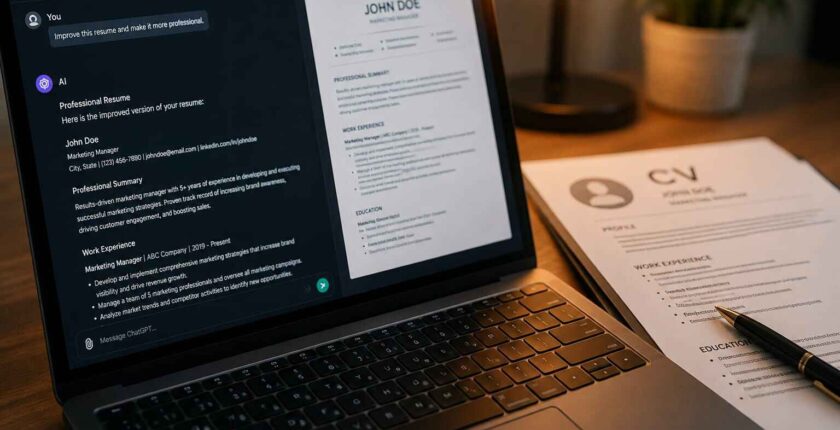
My first attempt was almost a disaster. I pasted my old resume into a popular AI writing tool, typed “make this better,” and got back something that sounded like a corporate press release written by someone who’d never actually met me. Phrases like “results-driven professional with a passion for synergistic collaboration” showed up, and none of it sounded like something I would ever say out loud to another human being.
That was the first real lesson. AI tools are genuinely powerful, but only when you treat them as an editor and structuring assistant, not as something that invents your entire professional identity from a two-line prompt. The CVs that actually worked, both mine and my cousin’s, came from a completely different approach: feeding the tool real, specific details about actual accomplishments, then using it to tighten the language, fix formatting, and catch things I’d naturally overlook, like repetitive verbs or awkward phrasing.
Once I understood that distinction, the whole experience changed completely.
The AI Tools I Actually Tested (And My Honest Take on Each)
Rezi genuinely surprised me the most. I’d applied to a marketing coordinator role and assumed my resume already covered the basics, but running it through Rezi’s keyword matching feature showed me I was missing terms like “campaign analytics” and “stakeholder communication” that appeared repeatedly in the actual job posting. Adding those naturally, based on things I actually did, made a real difference in how the resume read.
Kickresume, on the other hand, taught me a harder lesson. Its AI-generated professional summary for me described me as someone with “extensive leadership experience driving organizational excellence,” which sounded absurd for someone with two years of experience and one small team lead role. I had to rewrite that section almost entirely myself, keeping only the formatting the tool provided.
Before and After: What Actually Changed in My Cousin’s CV
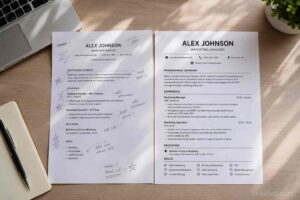
The customer service bullet point change genuinely mattered. Her original draft was technically true but told the interviewer absolutely nothing useful. Once we sat down and I asked her direct questions like “how many calls did you handle daily” and “did you track any metrics,” we got numbers she hadn’t even thought to include, and the AI tool simply helped phrase those numbers into a clean, professional sentence.
Step-by-Step: How I Actually Use AI Tools for CV Writing Now
- Write a messy, honest first draft myself — including real numbers, specific projects, and actual responsibilities, even if the language is rough.
- Feed that draft into the AI tool with specific instructions — like “make this bullet point more concise while keeping the exact numbers,” rather than a vague “make this better”
- Cross-check every AI-generated line against what I actually did — deleting anything that oversells or misrepresents my experience
- Run the resume through a keyword-matching tool like Rezi against the specific job description I’m applying for
- Read the entire thing out loud before finalizing — if it doesn’t sound like something I’d say in an interview, I rewrite it manually.
- Get one human, preferably someone in the same industry, to review it before submitting anywhere important.t
Step 5 sounds simple, but it caught more awkward AI phrasing than any other step in the entire process. If a sentence feels stiff or overly formal when spoken aloud, it almost always needed rewriting.
Common Mistakes People Make With AI CV Tools
- Copy-pasting AI output directly without editing — this is the single biggest giveaway to recruiters, who’ve genuinely started recognizing common AI phrasingpatternsr.ns
- Giving vague prompts like “improve my resume” — the more specific the input, the better and more accurate the output.put
- Letting AI invent achievements or numbers — this crosses into dishonesty and can seriously backfire during interviews when you’re asked to elaborate.
- Ignoring ATS formatting issues — some AI tools produce visually appealing resumes that actually break when parsed by applicant tracking systems.s
- Using the same AI-generated resume for every application — tailoring to each specific job description still makes a measurable difference.
The invented achievements mistake almost happened with my cousin’s resume. An early AI draft suggested a bullet point claiming she’d “increased customer retention by 20%,” a number neither of us could actually verify or explain. We caught it before submission, but it was a genuine reminder that AI tools will confidently generate specific-sounding claims that aren’t necessarily accurate.
Frequently Asked Questions
Are AI-written resumes detected and penalized by recruiters or ATS systems?
Recruiters can often sense overly generic AI phrasing, though ATS systems themselves don’t penalize AI-assisted content specifically; the real risk is sounding impersonal or making unverifiable claims.
Which AI tool is best for someone with very little work experience?
Tools like Kickresume tend to work well for entry-level candidates since they offer templates alongside AI suggestions, though the AI-generated summary sections usually still need honest, personal editing.
Can AI tools help tailor my resume for different job applications quickly?
Yes, tools like Teal and Rezi are specifically designed to compare your resume against a job description and highlight missing relevant keywords, which speeds up the tailoring process significantly.
Is it okay to use free AI tools, or do paid versions make a real difference?
Free versions of most tools cover basic rewriting and formatting needs adequately; paid versions typically add more detailed ATS analysis and additional template options, which matter more for competitive roles.
How much should I edit AI-generated CV content before it feels authentic?
Expect to rewrite or adjust nearly every sentence to include specific, verifiable details from your experience; treat the AI output as a rough draft, not a final product.
Can AI tools help with cover letters as well as resumes?
Yes, most of these platforms also offer cover letter assistance, though the same rule applies: specific personal details and a genuine tone matter far more than polished generic language.
Do AI resume tools work well for creative or non-traditional career fields?
They can help with structure and grammar, but creative fields often benefit more from human-reviewed, personality-driven language that AI tools tend to flatten into generic corporate tone.
How do I know if my AI-assisted resume still sounds like me?
Read it out loud, and if you wouldn’t naturally say a sentence in an actual conversation or interview, it likely needs rewriting in your own words.
Final Thoughts
AI tools for CV writing genuinely helped both me and my cousin, but not in the “type one sentence and get a perfect resume” way most marketing around these tools suggests. The real value came from using AI as a structuring and editing partner, while keeping every actual claim, number, and achievement grounded in something real and verifiable.
If you’re considering using one of these tools, start with your own honest draft first, then let AI help refine and tighten it, not replace your voice entirely. The resumes that actually got results, mine and my cousin’s both, were the ones where AI polished the language but a real person’s experience was still clearly the foundation underneath it.